“Tested for hold strength.” No strength published.
Search for the best magnetic car mount and the first result is headlined tested for hold strength. It is published by MagBak, which sells one of the six mounts it ranks and puts its own at number one. We read the whole article looking for a figure. There is not one, in any unit.
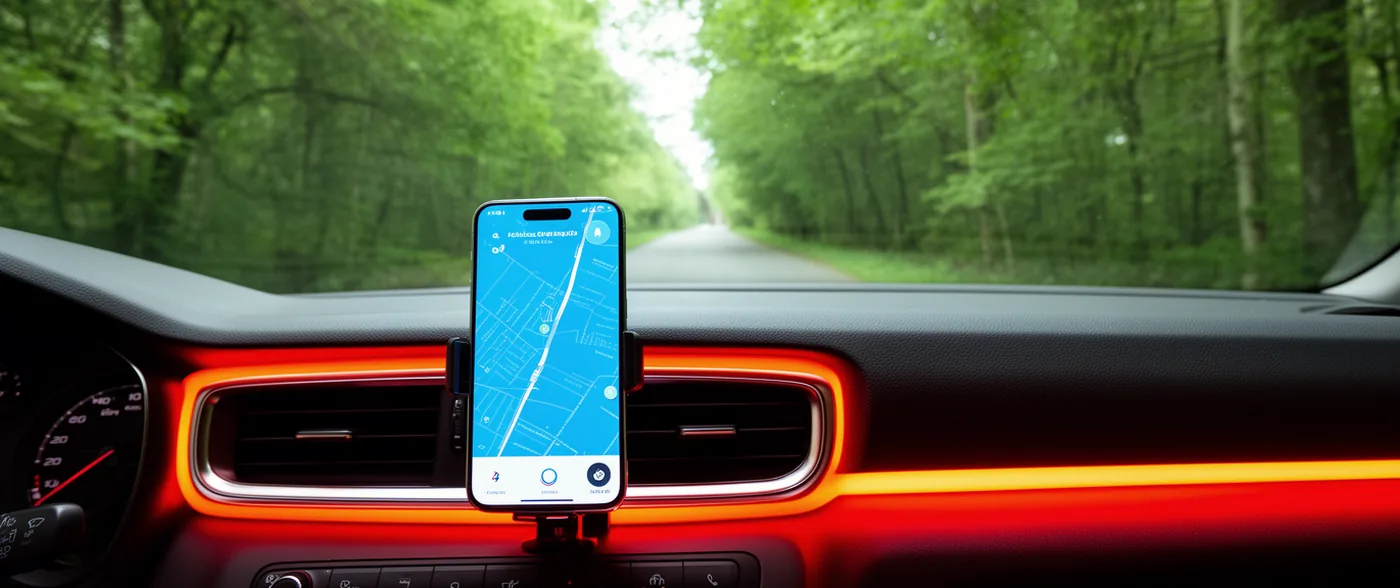
Nobody has published a hold-strength figure
This is checkable, so we checked it: we searched the full 14,700 characters of that article for a hold-strength figure in newtons, pounds of force, kilograms of pull, gauss, millitesla or grams held. Zero matches in every unit.
What appears instead is strong, unmatched security, standard magnet strength, reasonably well for everyday city driving. The stated method is not a method but a question: “does it stay put on bumpy roads, sharp turns, and highway speeds?”
To be fair to them, nobody else publishes one either. Car and Driver fitted mounts to cars and named a pick without a strength figure, and so did Wirecutter. A magnet's pull is one of the easiest things in this whole site to measure — a spring scale and a phone — and in a category sold entirely on it, no one has.
So this page does not rank mounts by strength, because we would be inventing the ranking. Three other things decide whether a mount works for you, and all three can be checked before you buy.
Three things that are checkable
- What the magnet actually is — a MagSafe array, or a disc that needs a plate stuck to your phone.
- What it clips to — and whether your vents are the shape it assumes.
- What it charges at — 7.5 W or 15 W, which is not a small difference on a short drive.
“Magnetic” and “MagSafe” are different products
A listing that says “magnetic mount” may not be a MagSafe mount. Apple's MagSafe is a ring of magnets in the phone that a mount aligns to; a cheaper “magnetic” mount is a plain steel disc that needs an adhesive metal plate stuck to your phone or case.
The difference is not subtle in use. The plate version works with any phone and blocks wireless charging where you stick it. The MagSafe version needs a MagSafe phone or a MagSafe case, and a thick or non-MagSafe case weakens it considerably. Even the manufacturer's own article marks one of its six as needing a metal plate — which means it is competing in a different category from the rest.
The vent is the part that fails
The most useful admission in that article is against its own kind: the vent mount's weak point is the vent, and it fails if your vents are angled. That is worth more than any adjective about magnets.
Vent blades differ enormously between cars — horizontal, vertical, round, recessed behind a bezel, or a thin slot with no blade to grip at all. Before buying a vent mount, look at your own vents and ask whether a clip can get behind a blade. If the answer is no, the strongest magnet ever made will not help; you want a dash or windscreen mount instead.
7.5 W or 15 W, and why it matters in a car
Charging wattage is a published specification and is worth reading. A MagSafe-certified charger delivers up to 15 W; a Qi magnetic charger delivers 7.5 W. One of the mounts in that round-up is a mount only, with no charging at all.
On a twenty-minute commute with navigation running and the screen at full brightness in daylight, 7.5 W is close to break-even — you may arrive with less battery than you left with. That is the scenario, so it is the specification to check.
What we would buy, and on what basis
Two independent publications that took no money from the makers — Car and Driver and Wirecutter — both landed on iOttie, and Car and Driver names the Velox as its MagSafe pick. Neither publishes a strength figure, so this is a convergence of judgement rather than of measurement, and we are labelling it as such.
What nobody has measured
- Hold strength, in any unit. The one figure the entire category is sold on. A spring scale would settle it in an afternoon.
- Grip retention over time. Vent clips relax and adhesive pads release in summer heat; no published test runs longer than a review period.
- Phone temperature while charging in sun. Wireless charging plus direct sunlight plus navigation is the combination that makes a phone throttle, and it is the normal case rather than the edge case.
marked MagBak, Best Magnetic Car Phone Mounts 2026: Tested for Hold Strength, 2026. Published by MagBak, which sells one of the six mounts it ranks and places its own first. Headlined “tested for hold strength”. We searched the full article text for a hold-strength figure in newtons, pounds of force, kilograms of pull, gauss, millitesla or grams held, and found none in any unit — the strengths are given as “strong”, “unmatched security” and “standard magnet strength”, and the stated method is the question “does it stay put on bumpy roads?”
use it Car and Driver, Best Car Phone Mounts For 2026, Tested, 2026. Hands-on evaluation of mounts fitted to vehicles. Names the iOttie Velox as its MagSafe pick. Publishes no hold-strength figure either.