The recall no spec sheet could have predicted.
This site exists on the premise that if you read the measurements carefully enough you can buy well. Jack stands are the category where that premise fails, and it is worth saying so on the page rather than quietly picking a product anyway.
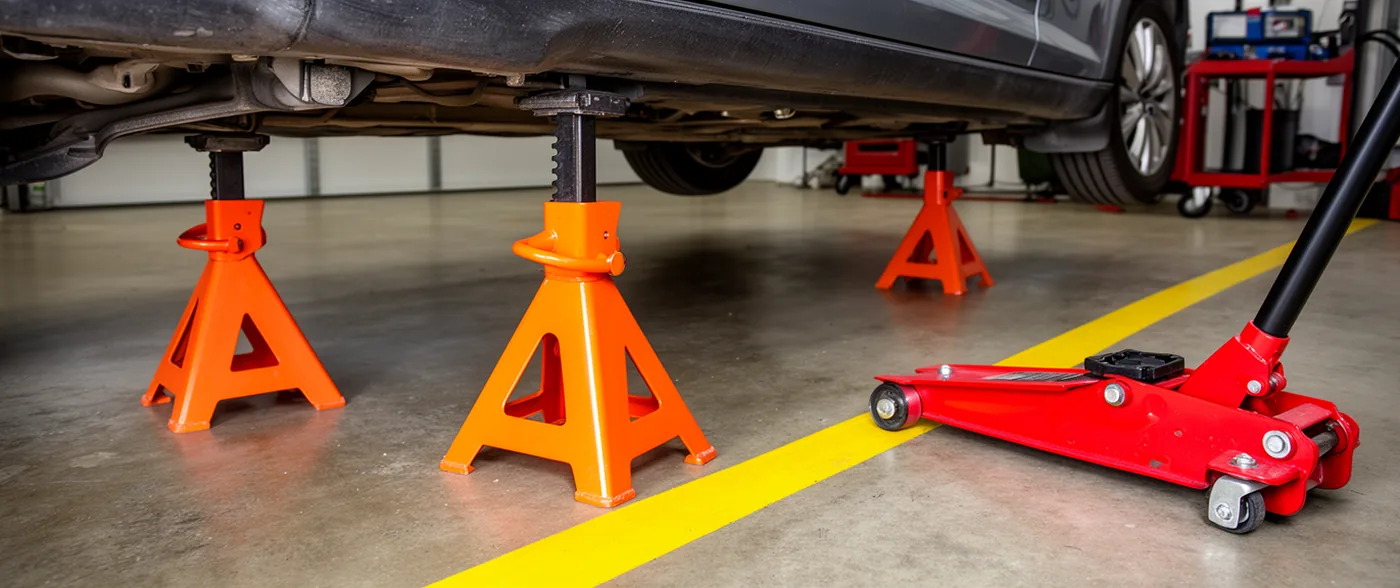
1.7 million stands, and injuries
In May 2020 the federal road safety regulator issued a consumer advisory: more than 1.7 million Pittsburgh Automotive 3-ton and 6-ton steel jack stands were being recalled because they may collapse under load. Injuries had been reported. Owners were told to stop using them immediately.
Scale runs to 1254000 units, the highest measured value here.
use it NHTSA, Consumer Advisory: warning to Harbor Freight jack stand users, 28 May 2020. The federal regulator's own advisory. More than 1.7 million Pittsburgh Automotive 3-ton and 6-ton steel jack stands recalled across two actions — 20E016, about 454,000 units built between June 2013 and November 2019, and 20E027, about 1,254,000 built between December 2012 and March 2020. Item numbers 61196 and 56371 (3 ton) and 61197 (6 ton). The stated failure is that the stands may collapse under load; injuries were reported. The original manufacturer attributed the defect to the ageing of production tooling.
Two actions, seven years of production between them, three item numbers: 61196 and 56371 in 3-ton, 61197 in 6-ton. If you have a pair of these in your garage, the number is on a label on the base or the top, and the answer is to stop using them rather than to inspect them.
Why no specification could have warned you
Here is the part that matters more than the recall. The regulator records the original manufacturer's finding: the defect was due to the ageing of production tooling. Not a design error. Not an under-rated part. The tooling that formed the stands wore out over years of production, and the parts it made drifted out of tolerance.
So the same item number, the same rated capacity, the same specification, the same photograph on the same listing was safe early in the production run and unsafe later. There was no figure on the box that changed. A buyer comparing specifications could not have detected it. Nor could a reviewer with one sample. Nor could we — and that is the honest limit of everything else on this site.
A measurement describes a sample at a moment. Where a category's risk lives in manufacturing variance rather than in design, reading the numbers harder does not help. That is not an argument for buying expensive; it is an argument for not relying on the purchase at all.
The rule that does protect you
The protection that works is procedural and free, and it is what every professional does regardless of what the stands cost:
- Never rely on a single support. Leave the jack in place, taking a little load, under the car and the stands. It is not redundancy for its own sake — it is the second thing that has to fail.
- Put a wheel under the sill. The wheel you just removed, laid flat under the jacking point, costs nothing and stops the car reaching the ground.
- Stands on concrete, never on tarmac. Asphalt creeps under a point load, especially warm. The stand does not have to fail for the car to come down.
- Load them before you go under. Lower the car onto the stands and push the car firmly sideways at the wing before any part of you is beneath it.
- Chock the wheels still on the ground, both sides, and leave it in gear or in park.
Why this page recommends nothing
Every other page on this site ends with a recommendation, because on every other page there is a measurement to rank on. There is not one here.
We could find no independent test that loads jack stands to failure across brands, and after the 2020 recall we would not trust a single-sample test if we found one — the failure mode was variance within one item number over time, which one sample cannot see. Ranking them on rated capacity would be ranking them on a number the recall proved does not hold.
So this page sells nothing. It is the only page here without a product link, and that is the finding rather than an omission: in this category the thing that keeps you alive is the second support, not the purchase.
use it NHTSA, Consumer Advisory: warning to Harbor Freight jack stand users, 28 May 2020. The federal regulator's own advisory. More than 1.7 million Pittsburgh Automotive 3-ton and 6-ton steel jack stands recalled across two actions — 20E016, about 454,000 units built between June 2013 and November 2019, and 20E027, about 1,254,000 built between December 2012 and March 2020. Item numbers 61196 and 56371 (3 ton) and 61197 (6 ton). The stated failure is that the stands may collapse under load; injuries were reported. The original manufacturer attributed the defect to the ageing of production tooling.
not measured No published test loads jack stands to failure across brands, and none samples enough units of one model to see the kind of variance that caused this recall. The procedural advice above is standard workshop practice rather than a measured finding, and is presented as such.