Dilution ratio calculator.
Type your bottle size and the ratio on the label. The answer is how much concentrate goes in first, before the water.
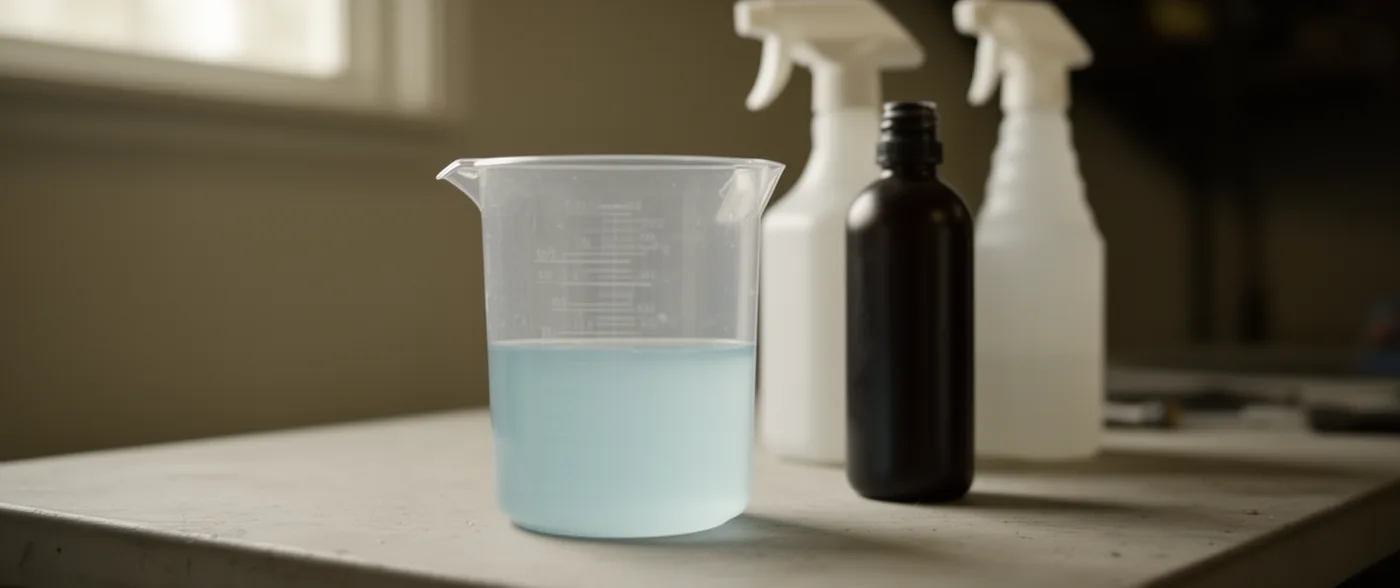
Before you type a number: which way round is the label?
This calculator assumes one part product to N parts water, and the number you enter is N. The same dilution gets written 1:10, 10:1, 10-1 and “ten to one”, and the order is not standardised — so a bottle marked 10:1 may mean ten of water to one of product, or ten of product to one of water. Those are not near-misses; they are opposite mixtures. Only enter a number here once you are sure water is the majority. If the label means the reverse — more product than water, as a few concentrates for machine use do — this calculator does not do that case, and reinterpreting its answers does not work: the second reading treats your number as the finished total, so reading it backwards gives 9:1 where you wanted 10:1. Use the label’s own target quantity instead.
Why there are two answers
Even once the order is settled, a ratio is read two different ways by two different halves of this industry. Some brands mean one part concentrate added to ten parts water, which makes eleven parts in total. Others mean one part concentrate made up to ten parts of finished liquid, so nine parts water.
At 1:10 the gap is about ten per cent of your concentrate — annoying, not dangerous. At 1:4 it is twenty-five per cent, which is the difference between a wheel cleaner that works and one that etches. By 1:200 it is 0.5 per cent, and at 1:256 it is 0.39 per cent — small enough that at high dilutions the difference between these two readings stops mattering and you can measure either way. That is only true of the two readings above; it says nothing about the order question, where getting it backwards at 1:200 means mixing something 200 times too strong. The label is the authority. If it gives a target quantity as well as a ratio — “4 oz per quart” — use that, because it removes the ambiguity entirely.
This calculator does not pick for you and does not average the two. Averaging would produce a number that neither manufacturer intended.
Common mixes
Concentrate needed, in fluid ounces, read as one part product to n parts water.
| Ratio | 16 oz | 22 oz | 24 oz | 32 oz |
|---|---|---|---|---|
| 1:4 | 3.2 | 4.4 | 4.8 | 6.4 |
| 1:10 | 1.45 | 2 | 2.18 | 2.91 |
| 1:15 | 1 | 1.38 | 1.5 | 2 |
| 1:20 | 0.76 | 1.05 | 1.14 | 1.52 |
| 1:32 | 0.48 | 0.67 | 0.73 | 0.97 |
| 1:128 | 0.12 | 0.17 | 0.19 | 0.25 |
| 1:200 | 0.08 | 0.11 | 0.12 | 0.16 |
| 1:256 | 0.06 | 0.09 | 0.09 | 0.12 |
Arithmetic, not a measurement — there is no source line on this table because there is nothing to source. Every figure is the bottle size divided by the ratio plus one.
Two things worth knowing before you mix
- Concentrate first, then water. Filling with water first and adding concentrate on top makes most detailing chemicals foam over the neck of the bottle, and you lose an unknown amount of what you just measured.
- Dilute with the water you will use. Hard water changes how some products behave, and a mix made with distilled water then topped up from the tap is not the mix you tested.